By Inja Škrinjar, product manager, Weiler Abrasives
At a Glance: How to Improve Roll Grinding PerformanceRoll grinding performance improves when mills match wheel specifications to the application’s priorities: high material removal for hot rolling, tighter finish control for cold rolling, and strong wheel durability for longer life. Key factors include ceramic grain technology, higher G-ratio, reduced wheel consumption, lower downtime, and minimizing defects such as chatter marks and burning.
Hot and cold rolling are critical processes used to shape raw steel into various forms and parts for many industries, including construction, automotive, aerospace and manufacturing. Roll mills typically require high productivity and fast material removal to minimize downtime, but that must be balanced in many cases with precise surface finish requirements to meet strict standards.
Roll maintenance can be a challenge for mills, since rolls are typically made from hard-to-grind materials, requiring specialty grinding wheels that don’t compromise roll integrity or safety. Industrial roll grinding is more than just maintenance; it’s a key step that directly impacts the quality of the final product as well as mill uptime and throughput.
Discover more about common roll grinding challenges and the necessary steps to maximize productivity and ensure quality.
Key Challenges in Roll Mill Grinding
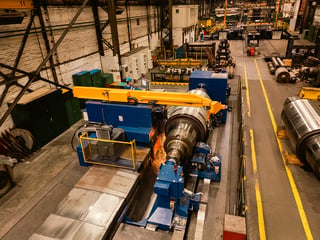
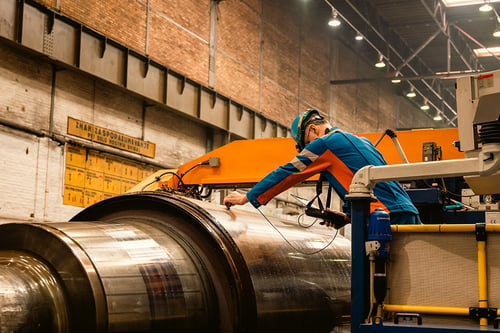
 Roll grinding is a specialized form of external cylindrical grinding designed for rolls, which are significantly larger than typical grinding parts. These rolls, used in hot or cold rolling mills, require regular maintenance to remove deformations and ensure smooth mill operation. In roll grinding, the deformed layer of material is removed to restore the roll to precise geometric and surface specifications.
Operations face several key challenges that impact productivity, efficiency and quality in roll grinding, including:
Defects and quality issues
Quality is often a top priority in rolling mills. The roll grinding process itself should not introduce flaws that will be transferred to the finished steel. For example, chatter marks and spirals can be caused by vibrations or grains falling out of the wheel, and burning can occur if the grinding wheel is too hard for the application. When there are stringent surface finish requirements, mills typically prioritize that over a high material removal rate.
Grinding wheel consumption
Frequent grinding wheel changeovers not only increase the downtime required for swapping out wheels used for roll grinding, but they also increase the mill’s consumable costs. To optimize productivity and wheel life, mills typically look for a grinding wheel with a higher G-ratio, which is calculated by dividing the volume of the removed material by the volume of the wheel that is used. A wheel with a higher G-ratio is more efficient, removing more material of the roll with less grinding wheel consumption.
Downtime
In many roll mills, there is a constant need for quick material removal to minimize downtime and get rolls back into the process. Daily maintenance is common, especially in the first stages of the process when the rolls are much harder, increasing the deformity on the rolls.
Risk of wheel failure
Safety issues can result when a wheel bursts or fails. Wheel safety and structural integrity are critical to prevent operator injury or damage to the machinery.
Hot Roll Grinding vs. Cold Roll Grinding
There are several key differences between hot roll grinding and cold roll grinding. These distinctions affect the goals of the operation and the right choice of roll grinding wheel for the job.
Hot roll grinding priorities
Hot roll mills use high temperatures to shape raw steel into various forms, such as sheets, plates and structural components. Hot rolling is often done with thicker material at the start of the process for the initial shaping of the steel. The hardest-to-grind materials are found in this stage, so they experience greater deformation from thermal and mechanical stress. Productivity is usually the top priority in hot roll grinding, so there is a need for coarser, more aggressive grains that remove more material faster. Surface finish requirements are typically less strict when compared to cold rolling, since material removal rate is the priority.
Cold roll grinding priorities
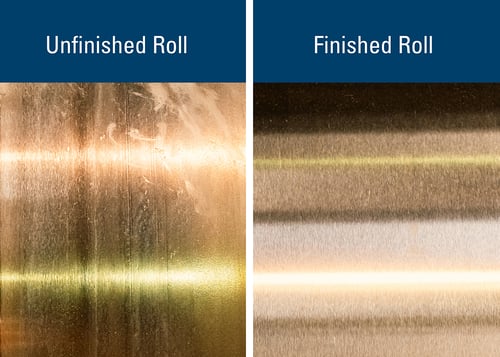
 Cold rolling occurs at room temperature or slightly below, and the process starts with hot-rolled steel that has cooled. Cold rolling involves the final rolling of steel into thinner sheets for precision components, so they have much stricter requirements for final finish and aesthetics. The top priority in these applications is finish quality, and productivity is less critical. It requires roll grinding wheels that use finer grains to achieve the necessary specific finishes. Because the rolls are not damaged as much during the process, they require less frequent maintenance compared to hot rolling.
What to Look for in High-Performance Grinding Wheels
The specific challenges of roll mills can be addressed by choosing the right grinding wheels that stand up to the requirements. Here are several factors for mills to consider:
Upgraded ceramic grain
Advanced abrasive grain technology can deliver significantly better results in roll grinding. For example, the advanced ceramic grain used in Fortis Mill Hot and Cold Roll Grinding Wheels from Weiler Abrasives is designed to be self-sharpening. Grains continually fracture into sharp, aggressive cutting points throughout the grinding process. This leads to higher, more consistent material removal rates and shorter grinding cycles.
Greater durability and grain retention
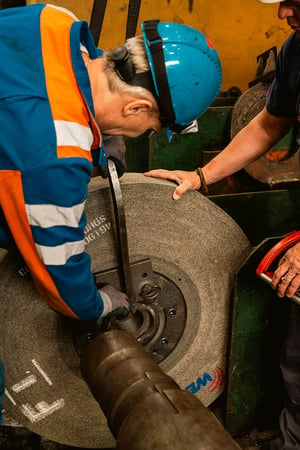 Weiler has a new grain treatment technology that increases the time the grain remains anchored in the bonding system. Ultralock technology is a proprietary grain treatment technology enhances the retention of the abrasive grain and significantly contributes to the wheels' durability, reducing consumable spend and changeovers.
Tailored grinding wheel solutions
Work with a grinding wheel provider that has experience and offers custom solutions for roll grinding. This results in grinding wheels that can handle the demands of roll hardness (for grinding hard rolls in the early hot mill stages vs. softer rolls later) and required surface finish. The manufacturer can adjust the wheel's hardness, grain and bond system. This is crucial because even similar machines and rolls often require different parameters due to site-specific conditions. An experienced wheel manufacturer can also provide expertise to help troubleshoot issues like chatter and burning by recommending the correct wheel specifications. Choosing a wheel designed for the specific application can help optimize performance, results and wheel life.
On-site technical support
An abrasives partner that provides on-site support can help operations not only choose the right solutions but also dial them in for optimized performance.
Real-World Results from Optimized Roll Grinding
Case Study 1: Improving G-ratio and Eliminating Defects in Hot Roll Grinding
For one market leader in the European hot-rolled stainless-steel industry, critical productivity challenges were affecting their throughput and bottom line. Their existing grinding wheels delivered suboptimal performance, and they needed a better solution.
After a comprehensive analysis of their specific requirements, they implemented the innovative Fortis Mill grinding wheel. On-site testing produced remarkable results, including a 21% increase in HSS (G-ratio), a 30% increase in ICDP Material (G-ratio), and a 24% increase in Forged Material (G-ratio).
The change helped them meet several key goals in the operation, including:
- Improved G-ratio performance across all material types.
- Improved surface finish quality in fewer passes.
- Improved versatility with one wheel that was able to grind different materials.
- Elimination of quality issues such as chatter marks and burning.
Case Study 2: Eliminating Surface Defects and Reducing Costs in Cold Roll Grinding
A European steel producer was trapped in a frustrating cycle. Despite working with industry-leading suppliers, their cold roll mill grinding wheels kept leaving microscopic scratch patterns across expensive rolls. Quality was suffering, costs were climbing, and their established vendors had run out of answers.
They consulted with a team of experts from Weiler Abrasives to find solutions. After a comprehensive process audit and examination of conditions, systems, procedures, and grinding parameters, the facility switched to the Fortis Mill wheel from Weiler Abrasives. The wheel is engineered specifically for cold roll mill applications. The solution helped them:
-
Eliminate comma patterns and scratches.
-
Double the wheel life compared to the previous solution.
-
Get three times the removal rate (G-ratio), without compromising quality.
-
Cut wheel consumption in half, for annual savings of €15,000-20,000.
How to Optimize Roll Grinding Results
High-performance roll grinding is achieved by adopting advanced grain technology that balances the competing needs of productivity and quality. The best grinding solution is not off-the-shelf; it is a custom-tailored product designed for the specific challenges of the mill. Combine the latest technologies with onsite abrasive expertise and operations can reach their full grinding potential, maximizing G-ratios and material removal rates while protecting roll quality and safety.
Key Takeaways from Roll Grinding Operations
- Hot roll grinding prioritizes material removal, while cold roll grinding prioritizes surface finish.
- Higher G-ratio improves productivity and reduces grinding wheel consumption.
- Chatter and burning are common issues tied to wheel selection and process conditions.
- Advanced ceramic grain and grain retention technologies improve consistency and wheel life.
- Application-specific grinding wheels and technical support deliver the best results.
Roll Grinding FAQs
What is roll grinding?
Roll grinding is a specialized form of external cylindrical grinding used to restore rolls to required geometric and surface specifications after deformation from rolling operations.
What is the difference between hot roll grinding and cold roll grinding?
Hot roll grinding usually prioritizes productivity and fast material removal, while cold roll grinding places more emphasis on surface finish quality and aesthetics.
What causes chatter marks and burning in roll grinding?
Chatter marks can result from vibration or grain pullout, while burning can occur when the grinding wheel is too hard for the application.
Why is G-ratio important in roll grinding?
G-ratio measures how efficiently a grinding wheel removes roll material relative to wheel wear. A higher G-ratio generally means better productivity and lower wheel consumption.
What should mills look for in roll grinding wheels?
Important considerations include ceramic grain performance, wheel durability, grain retention, application-specific wheel design, and access to technical support.